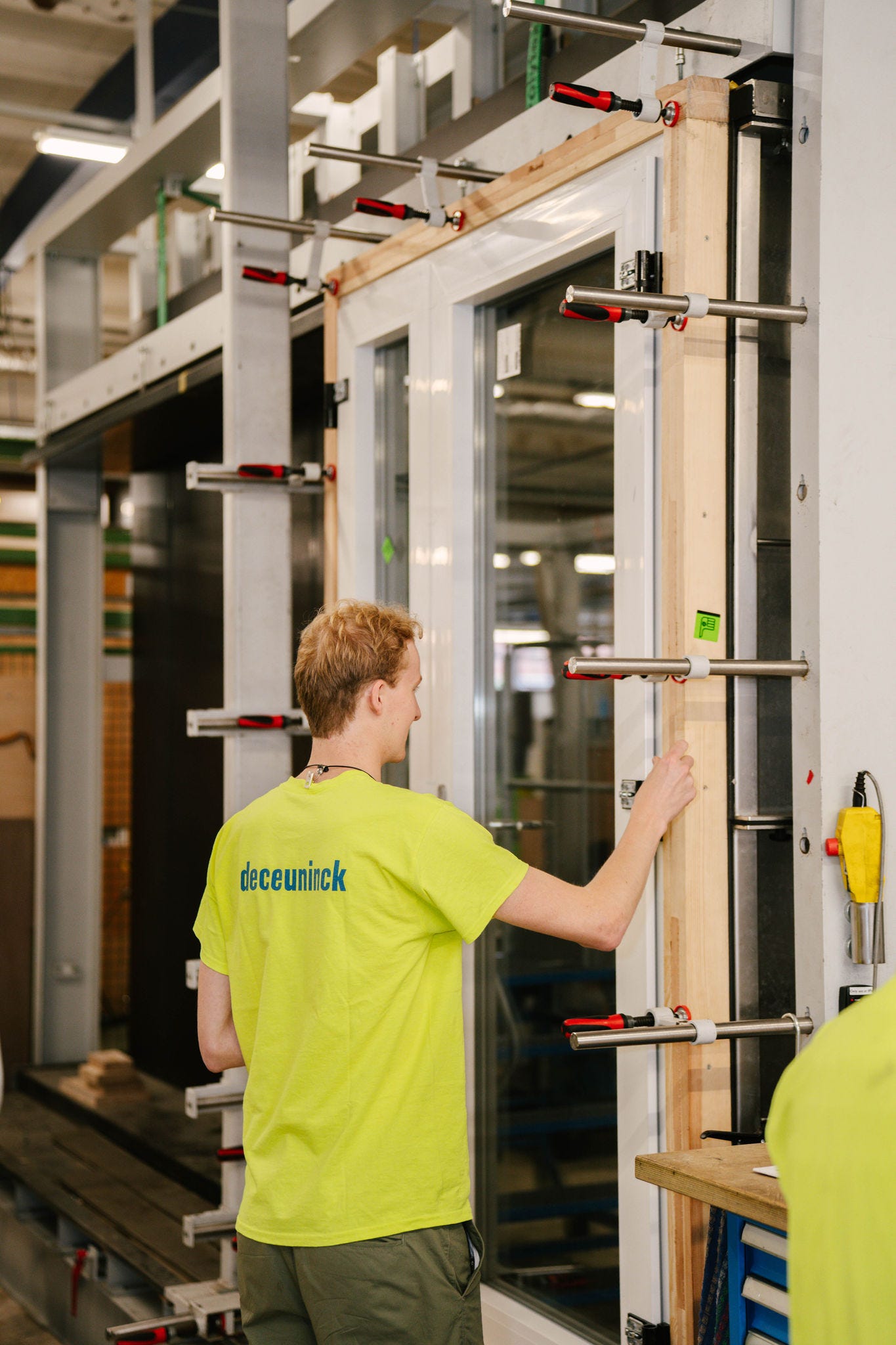
Deceuninck delivers strong H1 2026 performance
Executive Summary
- Sales increased to €420.1m in H1 2026, up 9.5% compared to H1 2025, driven by a 3.7% volume impact. The negative foreign exchange impact of the US Dollar and the Turkish Lira was offset by price/mix improvements.
- Gross margin increased by 2.7 percentage points to 36.2%.
- Adj. EBITDA increased to €67.3m (+23.4% vs H1 2025), largely driven by the stronger performance in Türkiye, while Europe also contributed positively to the year-on-year increase.
- Adj. EBITDA margin increased to 16.0%, compared to 14.2% in H1 2025.
- Net profit increased significantly to €26.2m, compared to €11.5m in H1 2025.
- Net Debt increased from €113.5m to €122.7m, mainly driven by the higher working capital need.
Half year report available at www.deceuninck.com/investors.
Quote from the CEO ad interim, Francis Van Eeckhout
“During the first half of 2026 we delivered a strong performance in a market environment that remained mixed across our regions. In Europe, market activity improved compared to the prior year, with slight volume growth in several key markets. At the same time, the sharp increase in raw material prices during the second quarter resulted in elevated customer purchasing activity, positively impacting our volumes and profitability. In North America, market conditions remain challenging, with high mortgage rates and economic uncertainty continuing to weigh on construction activity. In contrast, Türkiye delivered a strong performance, achieving significantly better results than in the first half of 2025 and demonstrating the strength of our market position in the region.”
Management comments
Business environment
In Europe, market conditions remained challenging during the first half of 2026. While key markets such as France and Spain showed signs of volume recovery, this trend was not yet reflected across all countries. The residential construction sector continued to face subdued demand, and overall market volumes remained at relatively low levels.
In North America, market conditions remained weak during the first half of 2026. Elevated interest rates and a challenging macroeconomic environment continued to weigh on residential construction and renovation activity. In addition, difficulties in attracting and retaining the right talent put further pressure on operational performance and results in the region.
In Türkiye, market conditions improved compared to the first half of 2025. Volumes increased and overall demand remained supportive throughout the period, providing a positive basis for the remainder of 2026. Additionally, the improving macro-economic environment supports our performance in the region.
Income Statement
Consolidated sales in H1 2026 increased by 9.5% to € 420.1m, compared to € 383.6m in H1 2025. The increase was driven by a 11.9% positive price/mix impact, mainly reflecting price increases in Türkiye, and was further supported by a 3.7% increase in volumes. Foreign exchange movements had a negative impact of 6.1% on sales growth.
The Adj. EBITDA increased to € 67.3m (+23.4% vs H1 2025). The Adj. EBITDA-margin in H1 2026 was with 16.0%, 1.8 percentage point higher than in H1 2025 (14.2%). The Increase in Adj. EBITDA is primarily driven by the higher profitability in Türkiye compared to prior year.
The financial result improved to € (7.2)m in H1 2026, compared to € (11.2)m in H1 2025. mainly reflecting reduced financing costs in Türkiye as policy interest rates declined compared to the prior-year period. Inflation rates stayed at relatively stable levels around 17% year to date.
Depreciations and amortizations slightly increased to € 25.2m in H1 2026 compared to € 23.7m in H1 2025.
Income taxes amounted to €(7.8)m in H1 2026 versus €(7.2)m in H1 2025. Higher current tax charges resulting from increased profitability were partly offset by a €3.7m deferred tax benefit following the enacted reduction of the tax rate on production activities in Türkiye, effective from the 1st of January 2027.
As a result of the above, net profit increased significantly from € 11.5m in H1 2025 to € 26.2m in H1 2026.
Cash flow and Balance sheet
Capex amounted to € 12.4m in H1 2026 compared to € 10.5m in H1 2025. The investments primarily targeted ongoing investments in our operational performance.
The Net Debt increased from € 113.5m per H1 2025 to € 122.7m. We increased inventories of raw material and finished products in order to protect services levels. Despite this increase, leverage decreased from 1.1x to 1.0x due to a higher EBITDA during the last twelve months.
Working capital increased from € 127.3m as per H1 2025 to € 169.2m, resulting from the higher inventories and receivables following the higher activity levels in H1 2026.
Outlook
For the second half of 2026, we expect a volatile market environment, influenced by macroeconomic uncertainty, geopolitical developments and cautious end-market sentiment across all regions.
It is important to note that the sharp increase in raw material prices during the second quarter, driven by geopolitical developments, resulted in an exceptionally strong order intake in April and May. We consider this as a temporary effect where sales volumes and profitability were positively impacted during the first half of 2026. We expect it to result in lower order activity and volumes during the second half of the year.
In Europe, the market continues to be fragmented, however, key markets such as France and Spain are reporting higher activity levels compared to a more challenging prior year. Despite this improvement, visibility on future volume developments remains limited.
In North America, market conditions are challenging, reflecting a difficult economic environment. Elevated mortgage rates and continued uncertainty are still affecting construction activity. In addition, we continue to face difficulties attracting and retaining qualified employees. Labour market conditions remain tight, and we expect these staffing challenges to persist throughout the remainder of 2026.
In Türkiye, we expect market conditions to remain supportive during the second half of 2026. Although macroeconomic conditions remain uncertain, we remain confident for the remainder of the year.